The Sidewalk Sprint: Why My Husband Walks Ahead of Me
It started as a small thing. A niggle. A fleeting thought on our walks to the local coffee shop. I’d be mid-sentence, telling a story, and realize I was talking to the back of my husband’s head. Kevin, the love of my life, would be a full stride or two ahead of me, completely oblivious.
At first, I’d just speed up. Then, I started making jokes about him being in a race only he knew he was running. But over time, that little niggle grew into a full-blown question mark hanging over my head. Why does my husband walk ahead of me?
Hello there! My name is Amanda Erin, and if you’ve ever found yourself feeling like you’re constantly playing catch-up with your partner, you are not alone. It’s one of those weird, specific relationship quirks that can feel oddly significant.
You start to wonder, is he trying to get away from me? Is he annoyed? Is he just… faster? I went down the rabbit hole on this one, and what I found was a mix of science, psychology, and some good old-fashioned communication breakdowns.
So, grab a cup of tea (or something stronger, no judgment here), and let’s walk through this together at the same pace, I promise. I want to share what I’ve learned from my own experiences with Kevin and what it might mean when your partner seems to be marching to a beat that’s just a little bit faster than yours.
The Unspoken Language of Walking Pace
Before we dive into the deep end of relationship psychology, let’s talk about the simple, often overlooked physical differences. This isn’t about making excuses, but about understanding the baseline. When I first brought this up with Kevin, his response was a bewildered, “I do? I don’t even notice.” And honestly, I think he was telling the truth.
The Biological Blueprint: Size and Stride
It might sound ridiculously simple, but a major reason men often walk faster than women comes down to basic anatomy.
- Longer Legs, Longer Stride: On average, men are taller than women. Kevin is a good six inches taller than me. His natural, comfortable walking stride covers more ground than mine does without any extra effort. For him to match my pace, he has to consciously shorten his stride, which can feel unnatural and slow.
- Muscle Mass and Power: Men typically have a higher percentage of muscle mass, particularly in their legs. This gives them more power in each step, allowing them to propel themselves forward faster with less perceived effort. What feels like a leisurely stroll to him might feel like a brisk power walk to me.
- Pelvic Structure: This one is fascinating. A woman’s pelvis is generally wider to accommodate childbirth. This can cause a slight side-to-side sway when walking, which, while totally normal, can be slightly less efficient for forward momentum compared to a man’s narrower pelvic structure. It’s a tiny difference, but over thousands of steps, it adds up.
When I started observing other couples, I saw it everywhere. Taller partners, regardless of gender, often unconsciously set a faster pace. It made me realize that Kevin wasn’t necessarily trying to leave me in his dust. His body was just built for a different speed setting. This isn’t the whole story, of course, but it’s a crucial and often overlooked part of the equation.
Psychological Drivers: What’s Going On In His Head?
Okay, so biology is part of it. But let’s be real, relationships are rarely that simple. Sometimes, the gap on the sidewalk is a reflection of a gap somewhere else. This is where I had to do a bit of soul-searching and, more importantly, start a real conversation with Kevin. What I discovered is that his speedy walking often had roots in his mindset, habits, or even his perception of his role as a partner.
The “Provider and Protector” Instinct
Ever notice how your husband seems to be on high alert in a crowd or an unfamiliar neighborhood? He might be scanning the environment, subconsciously on the lookout for potential obstacles or threats. This isn’t him being a paranoid action hero; it’s often a deeply ingrained instinct.
When a man walks slightly ahead, he might be unconsciously putting himself in a position to “lead the way” and ensure the path is clear. It’s a modern-day version of the hunter-gatherer leading the tribe through the wilderness. He’s not thinking, “I must protect Amanda from that rogue squirrel,” but his brain might be wired to take the lead position.
I remember one time we were navigating a packed street market. Kevin was several feet ahead, weaving through people. My initial feeling was annoyance hello, I’m back here! But when I caught up, he said, “Just trying to clear a path for us.”
He was so focused on the task of getting us through the crowd that he forgot the “us” part included walking with me. It wasn’t malicious; it was just his brain switching into a different mode.
The Destination-Focused Mindset
Are you a “journey” person or a “destination” person? I’m all about the journey. I like to meander, look at the shop windows, and notice the little details. Kevin? He’s all about the destination.
When we’re walking somewhere, his brain has already calculated the most efficient route, and his body is simply executing the plan. The walk isn’t the event; it’s the thing you do to get to the event.
This can lead to what I call “mission mode.”
- The Goal: Get from Point A to Point B.
- The Obstacles: Slow walkers, sidewalk cracks, traffic lights.
- The Strategy: Walk as efficiently as possible to achieve the goal.
In this mindset, connection and conversation can become secondary. He’s not ignoring you; he’s just hyper-focused on the task at hand. It’s the same focus he might use at work to solve a problem or when he’s assembling furniture with those notoriously confusing instructions. Recognizing this helped me depersonalize his speed. It wasn’t about me; it was about the mission.
Habit, Upbringing, and Unconscious Behavior
We are all creatures of habit. How did his family walk together when he was a child? Did his father always walk ahead of his mother? Sometimes, these behaviors are learned so early in life that they become completely automatic.
Kevin grew up in a busy city where walking fast was a survival skill. You walk with purpose, you don’t dawdle, and you keep up with the flow of pedestrian traffic. He carried that habit into our more suburban life without ever thinking about it. His “normal” pace was simply faster than mine.
It’s also possible that he’s just… in his own world. He could be thinking about a problem at work, planning his next project, or mentally running through his to-do list. In these moments, his body goes on autopilot, and his autopilot speed is set to “fast.” He’s not walking away from you; he’s just walking with his thoughts.
When It’s More Than Just a Fast Walk: Signs of a Deeper Issue
Now, we need to address the elephant on the sidewalk. While most of the time this issue is harmless, there are instances where walking ahead can be a symptom of a deeper disconnection in the relationship. It’s important to be honest with yourself and look at the bigger picture.
Red Flags to Watch For
A fast walking pace on its own is rarely a major problem. But when combined with other behaviors, it can signal that something is wrong.
- Consistent Lack of Awareness: You mention it, he apologizes, and then he does it again five minutes later. If he shows no real effort to change after you’ve expressed that it bothers you, it might indicate a lack of consideration for your feelings.
- Anger or Dismissiveness: If you bring it up and he gets defensive, angry, or tells you you’re being “too sensitive,” that’s a huge red flag. A partner should be able to listen to your feelings without dismissing them. This reaction suggests the problem is much bigger than just walking.
- Emotional and Physical Distance in Other Areas: Does he walk ahead of you and also seem distant at home? Does he avoid eye contact, shy away from physical touch, or shut down conversations? If the sidewalk gap is just one example of a much larger emotional chasm, the walking isn’t the problem it’s a symptom.
- Walking Ahead as a Power Play: In some unhealthy dynamics, one partner might use physical space to assert dominance or control. Walking ahead can be a subtle, non-verbal way of saying, “I’m in charge,” “My time is more important,” or “Keep up or get left behind.” This is often accompanied by other controlling behaviors.
If these points resonate with you, the conversation needs to shift from “Why do you walk so fast?” to “Why do I feel this distance between us?” It may be time to consider having a serious heart-to-heart or even seeking guidance from a couples counselor.
How to Close the Gap: A Step-by-Step Guide
So, you’ve determined it’s likely a harmless (but annoying) habit. What can you do about it? Ignoring it will only let resentment build. Here’s a practical, step-by-step approach that worked for Kevin and me.
Step 1: Choose the Right Time and Tone
Bringing this up while he’s halfway down the block and you’re yelling after him is… not effective. Trust me, I’ve tried it. The best time to talk is when you’re both calm, relaxed, and not in a rush.
Don’t: Say, “You ALWAYS walk ahead of me and it drives me crazy!” This immediately puts him on the defensive.
Do: Use “I” statements and a gentle, even humorous, tone. Try something like, “Hey, can I talk to you about a funny little thing I’ve noticed? When we walk together, I sometimes feel like I’m in a race to keep up with you.”
Step 2: Explain How It Makes You Feel
He genuinely might not understand why it’s a big deal. The key is to connect his action to your emotion. He can’t argue with how you feel.
You could say:
- “When you walk ahead, it makes me feel a little left behind, like we’re not really together.”
- “I love talking with you when we walk, but it’s hard to have a conversation with your back.”
- “Walking together feels like a connecting activity for me, and when there’s a gap between us, I feel disconnected.”
This frames it not as an accusation, but as an expression of your needs. It’s a game-changer, IMO.
Step 3: Brainstorm a Solution Together
Make it a team effort. This isn’t about him “fixing” a problem; it’s about the two of you finding a new rhythm. The most obvious solution is for him to slow down, but there are other creative ways to bridge the gap.
The Golden Solution: Hold Hands.
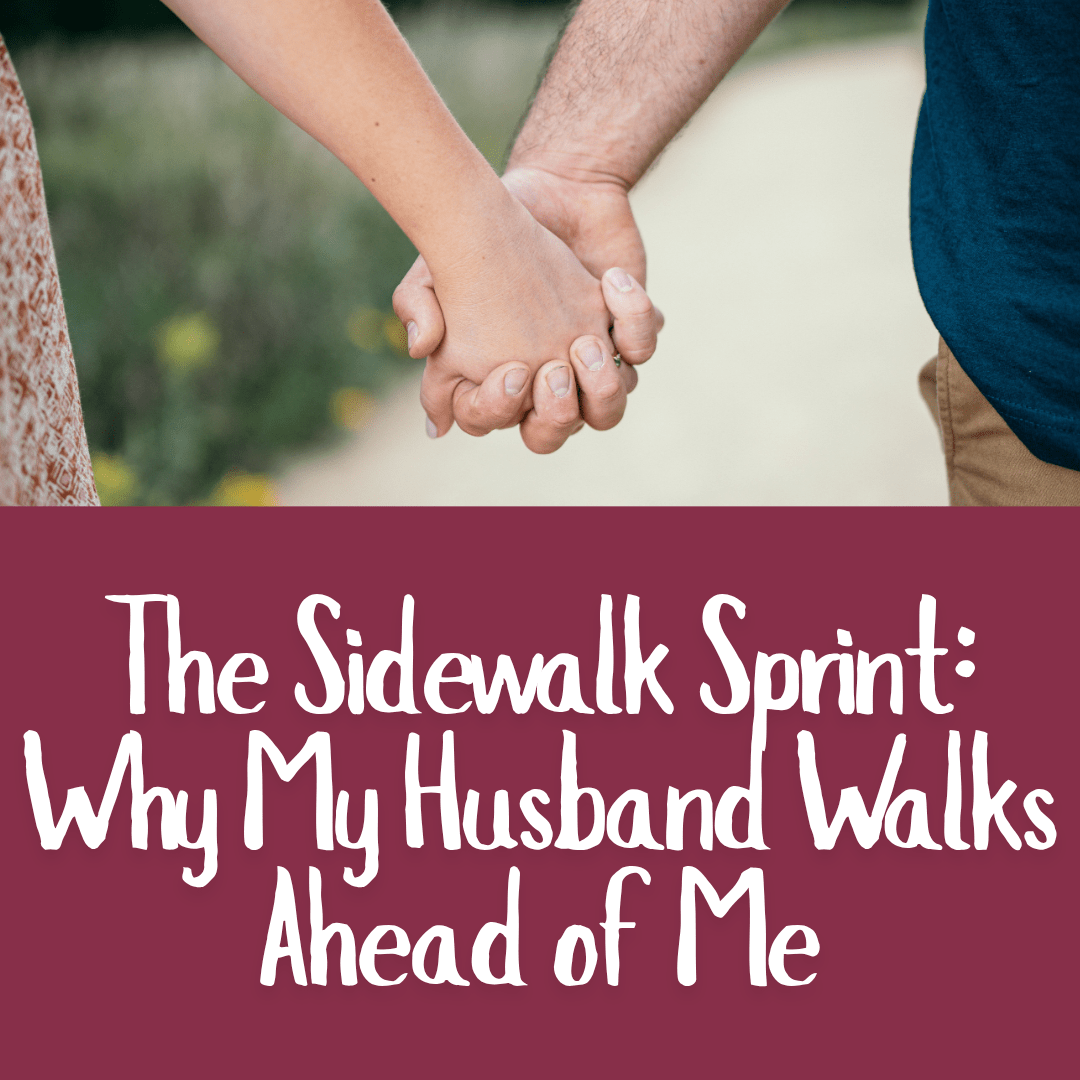
This was our breakthrough. It’s simple, it’s connecting, and it’s a physical tether. When we hold hands, his pace naturally adjusts to mine. He can’t just zoom ahead without literally pulling me off my feet. It’s an automatic regulator that also boosts intimacy. Win-win!
Other ideas include:
- Linking Arms: A bit more formal, but has the same effect. Great for a romantic evening stroll.
- Create a Non-Verbal Cue: Agree on a gentle signal, like a quick squeeze of his hand or a light tap on his arm, that means, “Hey, you’re speeding up again.” This avoids having to call it out verbally every time.
- Put Him on “Stroller Duty”: If you have kids, give him the stroller. It’s almost impossible to speed-walk while navigating a stroller, and it forces a more deliberate pace.
Step 4: Be Patient and Give Positive Reinforcement
Habits take time to change. He will forget. He will speed up again. The first few times he does, gently use your cue. When he consciously slows down or reaches for your hand, acknowledge it. A simple, “Thanks for waiting for me” or “I love walking like this with you” reinforces the new behavior in a positive way.
Common Mistakes to Avoid When Addressing the Issue
Navigating this conversation can be tricky. It’s easy to fall into traps that make the situation worse instead of better. Here are a few common mistakes I learned to avoid.
- Making Assumptions: Don’t assume you know his intentions. Avoid jumping to conclusions that he’s angry, resentful, or trying to get away from you. Lead with curiosity, not accusation. Ask questions like, “Have you ever noticed that you walk really fast?” instead of stating, “You’re trying to leave me behind.”
- Using Passive Aggression: Sighing loudly, muttering under your breath, or deliberately slowing down to a crawl to “make a point” will only create tension. These tactics are indirect and breed resentment. Be direct, kind, and honest about what you need.
- Turning It Into a “You vs. Me” Battle: This isn’t a competition. The goal is to feel more connected as a couple. Frame the issue as a “we” problem. Instead of “You need to slow down,” try “How can we make our walks more enjoyable and connected for both of us?”
- Ignoring the Context: Is he walking fast because you’re late for a movie? Is he rushing to get out of the rain? Sometimes there’s a perfectly logical, situational reason for the pace. Don’t sweat the small stuff. Focus on the chronic, everyday pattern, not the one-off instances.
Conclusion: Finding Your Pace as a Couple
That little gap on the sidewalk can feel like a huge chasm when you let it. But in most cases, it’s not a sign of a failing relationship. More often than not, it’s a simple collision of biology, habit, and a destination-focused mindset. My husband, Kevin, wasn’t running away from me; his legs were just running on a different operating system.
Ultimately, learning to walk together is a beautiful metaphor for the partnership itself. It requires communication, compromise, and a willingness to adjust your own pace to stay in sync with the person you love. The goal isn’t for one person to speed up or the other to slow down, but to find a rhythm that works for both of you.
Now, I want to hear from you! Have you ever felt like you were in a one-person race with your partner? What worked for you? Share your stories and tips in the comments below. Let’s help each other close the gap!
Frequently Asked Questions (FAQs)
Is it a sign of disrespect if my husband consistently walks ahead of me?
It can be, but it often isn’t. The key is his reaction when you bring it up. If you explain that it bothers you and he makes a genuine effort to change, it was likely just an unconscious habit. If he dismisses your feelings, gets angry, or continues the behavior without a second thought, then it veers into disrespectful territory because he’s ignoring a direct request that affects your feelings of connection.
What if I’m the one who walks faster than my husband?
This is a great question, and all the same principles apply, just in reverse! It might be due to your own habits, a destination-focused mindset, or simply your natural stride. If your husband expresses that he feels left behind, it’s an opportunity for you to practice awareness. Try holding hands or using other tactics to stay connected and enjoy the journey together.
My partner and I have a huge height difference, making it almost impossible to walk at the same pace. What can we do?
This is a real logistical challenge! Holding hands is still the best solution, as it creates a physical link that forces compromise from both sides. The taller person will have to consciously take smaller steps, and the shorter person might have to walk a bit more briskly. It’s about finding a middle ground that might not be either of your “natural” paces but becomes your special “couple’s pace.”
Could this walking-ahead behavior be linked to a cultural background?
Absolutely. In some cultures, it has traditionally been the norm for men to walk ahead of women as a sign of their role as the head and protector of the family. While these traditions are less common now, they can still influence behavior on a subconscious level, passed down through generations. It’s another potential reason that has nothing to do with the personal feelings between you and your partner.
What if he only walks ahead of me in certain situations, like when we’re with his friends?
This is a more specific context that’s worth exploring. It could be a form of “peacocking,” where he’s subconsciously trying to project an image of leadership or dominance within his social group. It could also be that he gets caught up in the group’s energy and pace and simply forgets. This is a great opportunity for a specific, gentle conversation: “I noticed that when we’re with your friends, we often get separated. Could we try to stick together more?”